Home › Beard restoration
Beard restoration
Beard restoration in Panamá
Define and fill in your beard with the DHI technique: follicle by follicle, with a natural, permanent result.
Message us on WhatsApp
Define and fill in your beard with the DHI technique: follicle by follicle, with a natural, permanent result.
Message us on WhatsAppA facial-hair restoration —also known as a beard transplant— makes it possible to fill in patchy areas, cover scars or add shape and density to a beard that doesn't grow evenly, with a permanent, natural result. It's performed with the DHI technique, minimally invasive, under local anesthesia.
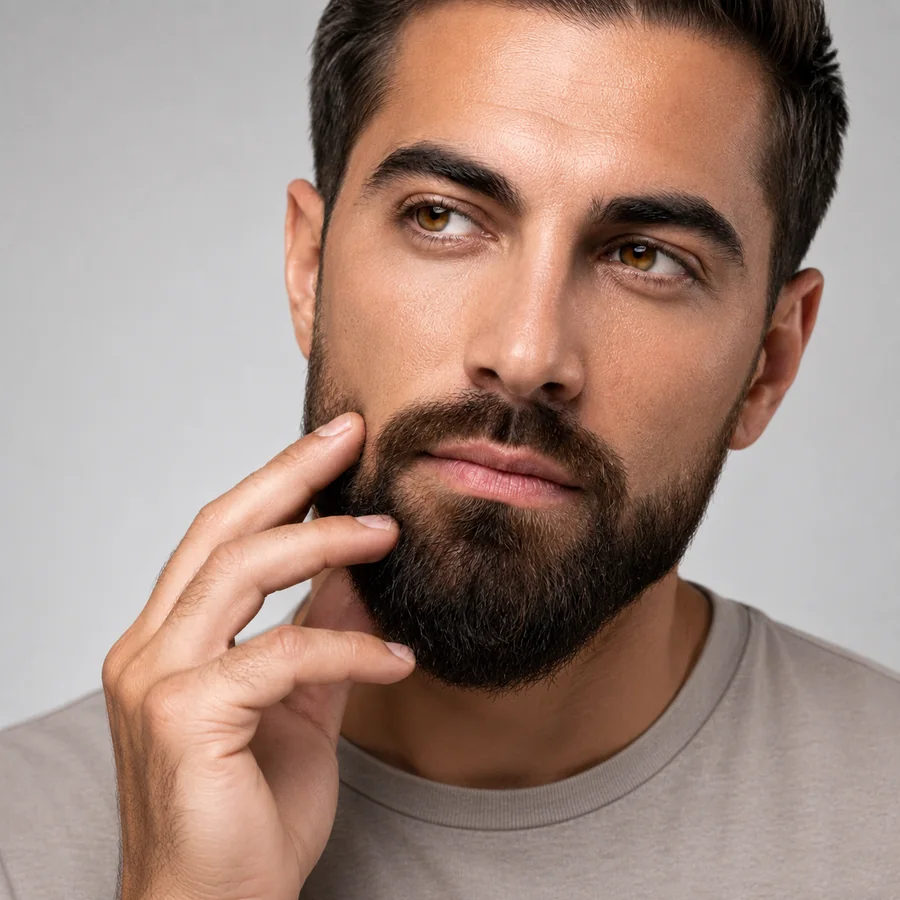
It's suitable for men who want to grow their own facial hair and achieve a long-lasting result. It's the ideal solution for those with bare patches, an uneven beard or scars that prevent even growth.
We evaluate the shape of the face, ethnicity, personal preference for style and density, and age. Based on this, the physician defines the most harmonious symmetry and design for you.
The most viable, DHT-resistant follicles are selected, extracted one by one from the donor area and implanted in the beard area with the DHI implanter, respecting the defined design.
The physician designs the beard or mustache area according to your needs and a defined symmetry.
Follicles are extracted from the donor area, usually the back of the head.
The number of follicles and graft type are calculated to achieve density and a natural result.
The follicles are placed according to the design. The implanted hair will grow and look natural for a lifetime.
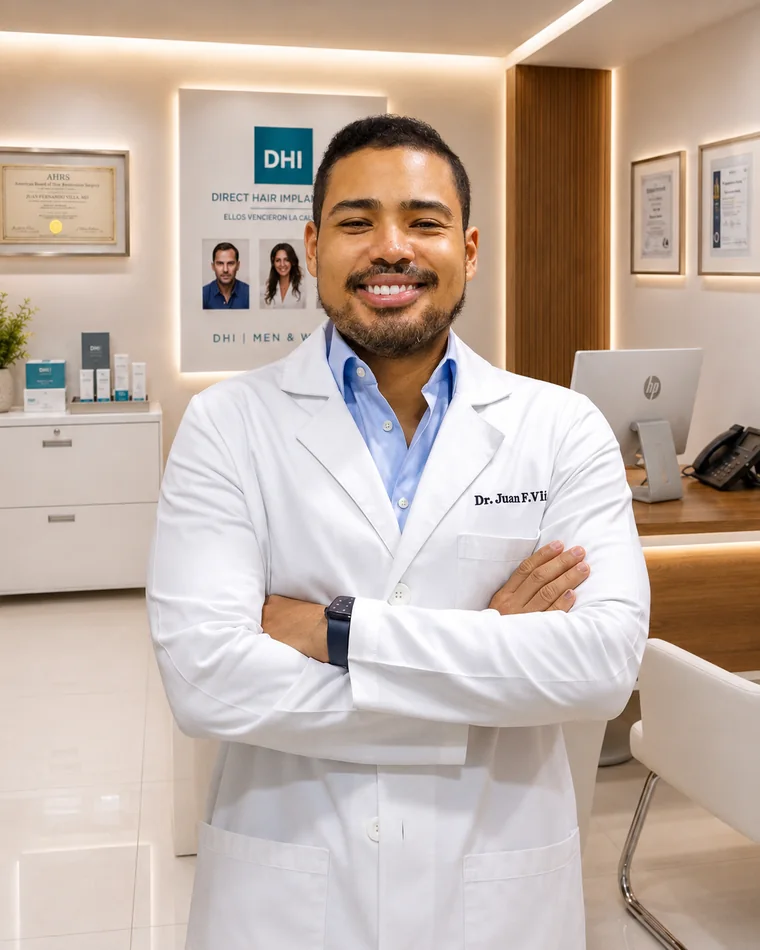
Medical Director · DHI Panamá
Dr. Juan Vlieg is one of the leading names in DHI hair restoration in Panamá and Latin America. He holds certifications from the American Board of Hair Restoration Surgery (ABHRS) and the International Society of Hair Restoration Surgery (ISHRS), which back his experience, training and commitment to the highest standards of hair medicine.
Throughout his career he has performed thousands of hair transplant procedures, focused on natural, harmonious results tailored to each patient's characteristics.
His medical philosophy rests on three core principles: an honest diagnosis, a fully personalized plan and the pursuit of the most natural result possible. That is why Dr. Vlieg personally takes part in the consultation, designs the hairline and performs every implantation procedure.
The price depends on the number of follicles you need, with a minimum investment of $3,000 per procedure. Message us on WhatsApp for your quote.
Request an assessmentBefore starting, the physician assesses the areas with low density and designs the beard shape according to the facial proportions, the existing growth pattern and the patient's preferences. The procedure is performed under local anesthesia. Follicles are extracted individually from a donor area, usually the back or side of the head. They are then implanted in the beard, mustache or sideburns, taking care of the angle, direction and depth to integrate them with the existing facial hair. Depending on the number of grafts, the session may last several hours or extend through much of the day. After the procedure, redness, small scabs and temporary tenderness are normal. The patient receives specific washing and care instructions to protect the grafts during the first few days.
Follicles correctly transplanted from a stable donor area usually keep their ability to grow long-term, so the result is considered permanent. However, no medical procedure can guarantee that every graft survives. During the first weeks, some of the implanted hair may shed temporarily as part of the follicle's normal cycle. A new stage of progressive growth then begins. Because the follicles usually come from the scalp, the implanted hair may grow faster or reach a greater length than the original facial hair. For this reason, it may need to be trimmed regularly to keep the desired style.
Before the procedure, the physician evaluates:
• The cause of the absence or low density of the beard.
• The quantity and quality of follicles available in the donor area.
• The presence of scars, alopecia areata, irritation or active skin conditions.
• The thickness, color, texture and growth pattern of the hair.
• The shape of the face and the beard design the patient wants.
• The number of grafts needed to achieve realistic coverage.
• Medical history, allergies and current medications.
• The patient's ability to follow the aftercare.
It is also determined whether the donor hair can visually integrate with the facial hair. A natural design requires placing the grafts by carefully following the direction and angle specific to each part of the beard. The DHI technique makes it possible to control these elements individually during implantation. Final candidacy is established after a personalized medical evaluation. When there is an active skin condition or a medical cause of hair loss, it may need to be treated before considering the transplant.
An honest consultation is the start. Message us today and tell us about your case.
Message us on WhatsApp


